
About the Program
"Fake K-Brands Abroad? The Government Is Fighting Back — Together with Businesses!"
With the Republic of Korea as the trademark owner, K-Brand authenticity is officially verified and protected. Advanced authentication technologies and a coordinated government-wide response system help prevent and stop the overseas distribution of counterfeit products.
Background
Growing Harm from Counterfeit Products Overseas
The damage caused by counterfeit K-Brand products abroad amounts to approximately KRW 11 trillion (based on OECD estimates), creating a vicious cycle of declining exports of authentic goods, reduced corporate revenues and job losses, and diminished national credibility.
Limitations of Individual Corporate Responses
Individual companies face clear limitations in responding on their own, owing to the absence of dedicated local personnel, language barriers, compensation awards that are small relative to substantial litigation costs, and the lack of cooperation from local authorities.
⇒ Accordingly, rather than leaving companies to fight counterfeits on their own, the government has built a nationwide response system, with the Republic of Korea directly holding the rights to a national certification mark that protects K-Brands.
What is the K-Brand Government Certification Program?
The K-Brand Government Certification Program is a government-led initiative under which the Republic of Korea, as the trademark rights holder, develops and issues the National Certification Mark (Authenticity Seal) to certify genuine K-Brand products that meet established certification standards. The program also enables the Korean government to jointly respond to counterfeiting incidents overseas.
Powered by advanced authentication technology, the program allows consumers to verify the authenticity of products in real time without installing a separate app. Businesses can also monitor the distribution areas and scale of counterfeit products bearing their brand and receive real-time alerts when suspected counterfeiting is detected.
A unique identification code is assigned to each product. If the same code is copied and used on multiple products, the system detects duplicate authentication attempts and identifies them as suspected counterfeits.
When products bearing the National Certification Mark are counterfeited overseas, the Korean government provides support to prevent and address damages suffered by Korean exporters through strong government-level responses, including criminal law enforcement measures.
Furthermore, by leveraging the credibility of the National Certification Mark, the program aims to enhance the brand value of K-Brands and support their expansion into overseas markets, enabling small and medium-sized enterprises, young entrepreneurs, and startups to benefit from the global recognition of Korea Premium.
The program is jointly operated by the Ministry of Intellectual Property (Overall program administration), the Korea Intellectual Property Protection Agency (Application review, authorization, and public disclosure), and the Korea Minting and Security Printing Corporation (KOMSCO) (Introduction of authentication technology and government funding support).
-
National Certification Mark
A national certification mark held by the Republic of Korea as the rights holder (trademark owner), with screening and usage approval for individual applicant companies
-
Advanced Anti-Counterfeiting Technology
AI digital watermarks, one unique code per product and more: “Hard to copy, easy to verify”
-
Cross-Government Joint Response
Real-time tracking of counterfeit trends through authentication scan data, and a comprehensive whole-of-government response


National Certification Mark
The government develops and files a national certification mark with the Republic of Korea as its rights holder, then screens individual applicant companies and grants them permission to use it. Approved companies can attach the national certification mark to their products and adopt anti-counterfeiting technology.
Advanced Anti-Counterfeiting Technology
By combining multiple layers of security technology, including AI digital watermarks and a unique code for every product, it makes genuine and counterfeit products easy to tell apart and difficult to copy.
Cross-Government Joint Response
Using data from authenticity scans, the government tracks counterfeit trends in real time and supports a comprehensive, whole-of-government response.
Application Process
Eligibility
Korean corporations currently exporting products overseas (products made in Korea; products made overseas are also eligible if the Korean corporation can prove it controls and manages the overseas production line)
SMEs and mid-sized enterprises (50% government subsidy and 50% company contribution, up to KRW 200 million per company per year; SMEs may cover up to 20% and mid-sized enterprises up to 10% as in-kind contributions); large enterprises (not eligible for cost support)
The product must meet Korean certification standards (e.g., KC, HACCP).
If no certification standard applies, a recommendation letter from the relevant ministry may be submitted instead.
The company’s own trademark must be filed or registered in the country of production and the export country (intended country of use).
In other equivalent cases, supporting documents must be submitted.
Institution
Step 1
Application for National Certification Mark Usage
Company
Step 2
Review and Approval of National Certification Mark Usage
KOIPA
Step 3
Announcement of Certified Products
KOIPA
Step 4
Notification of Eligible Recipients
KOIPA → KOMSCO
Step 5
Introduction and Production of Genuine Certification Technology
Company · KOMSCO
Step 6
Government Subsidy Disbursement and Settlement
KOMSCO
Following approval for the use of the National Certification Mark and the announcement of certified products, the process proceeds as follows:
Matching with an implementing agency by the Korea Minting and Security Printing Corporation → Execution of a contract for the introduction of genuine certification technology → Introduction and production of genuine certification technology → Disbursement of government subsidies
Program Roadmap
-
MOIP · KOIPA
- Develop the National Certification Mark and file for trademark registration in Korea
- File for trademark registration in 73 major overseas markets
-
Company · KOIPA
- (Company) Apply for authorization to use the National Certification Mark
- (KOIPA) Review and approve applications for use of the National Certification Mark
-
Company · KOMSCO
- Production contract signed between the company and KOMSCO
- Production of products with authentication technology applied (additional anti-counterfeiting technologies may be applied at the participating company’s request)
-
MOIP · KOIPA
- Monitor the results of genuine and counterfeit product verification
- Provide companies with information on counterfeit product distribution areas, scale, and related details
-
Joint Government Response
- In the event of infringement, the government and the affected company will respond together.


Why the Government Files the National Certification Mark in 73 Major Countries Worldwide (Planned)
These 73 countries are Korea’s top export destinations, accounting for 97% of the country’s total exports. Not all of them currently face serious counterfeit problems, but by also including countries that could become new hubs for counterfeits, the government is building a “preemptive protection network.”
⇒ Companies can apply to use the national certification mark by designating their own export countries.
| Asia | Europe | North America | Latin America | Africa | Oceania | ||||||||
|---|---|---|---|---|---|---|---|---|---|---|---|---|---|
| Northeast Asia | Southeast Asia | South Asia | Central Asia | West Asia (Middle East) |
Europe (EU) | Europe (Non-EU) | |||||||
| People’s Republic of China | Vietnam | India | Kyrgyzstan | UAE | Netherlands | Germany | Poland | France | United Kingdom | U.S.A. | Mexico | Egypt | Australia |
| Taiwan | Singapore | Bangladesh | Kazakhstan | Saudi Arabia | Italy | Belgium | Hungary | Spain | Switzerland | Canada | Brazil | South Africa | New Zealand |
| Hong Kong | Malaysia | Pakistan | Uzbekistan | Israel | Czech Republic | Slovakia | Denmark | Malta | Norway | Chile | Nigeria | ||
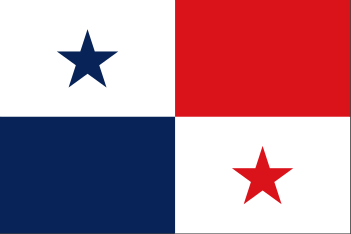
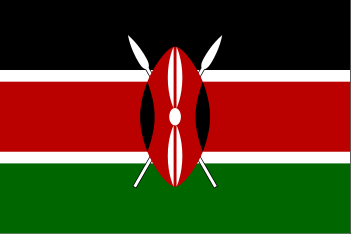
| Japan | Philippines | Iraq | Sweden | Ireland | Austria | Slovenia | Türkiye | Panama | Kenya | ||||
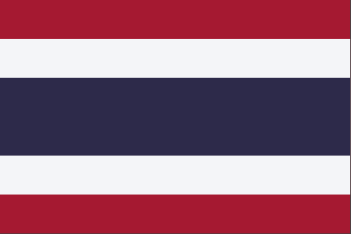
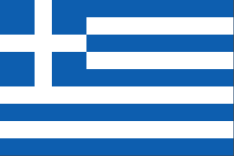
| Mongolia | Thailand | Qatar | Greece | Portugal | Romania | Finland | Russia | Colombia | |||||
| Indonesia | Kuwait | Lithuania | Bulgaria | Estonia | Croatia | Ukraine | Peru | ||||||
| Cambodia | Oman | Cyprus | Latvia | Luxembourg | Argentina | ||||||||












































Expected Benefits
Before
Purchase anxiety from the difficulty of telling genuine goods from counterfeits
Harm from counterfeit goods and declining consumer trust
Enormous cost and time spent on counterfeit disputes and after-the-fact responses
Erosion of brand value and stagnant sales caused by counterfeits
Administrative capacity and budget consumed mainly on crackdowns and after-the-fact remedies
Damage to national image and credibility from rampant counterfeiting


After
Instantly verify authenticity — no separate app required
Spreading a culture of worry-free shopping with ‘K’, a mark of Korea’s charm and trust
Reduced burden of combating counterfeit products, allowing businesses to focus on product development and exports
Securing the "Korea Premium" and strengthening brand competitiveness by leveraging the credibility of the National Certification Mark
Supporting SMEs, young entrepreneurs, and startups in expanding into overseas markets
Proactive response to counterfeit products through coordinated, government-wide cooperation
Fostering the National Certification Mark into a flagship national export brand through a unified public-private partnership
Contact
| Organization | Division | Phone | |
|---|---|---|---|
| Korea Intellectual Property Protection Agency (KOIPA) | K-Brand Government Certification TF | 02-6196-2045, 2043~4 | ip_mark@koipa.re.kr |